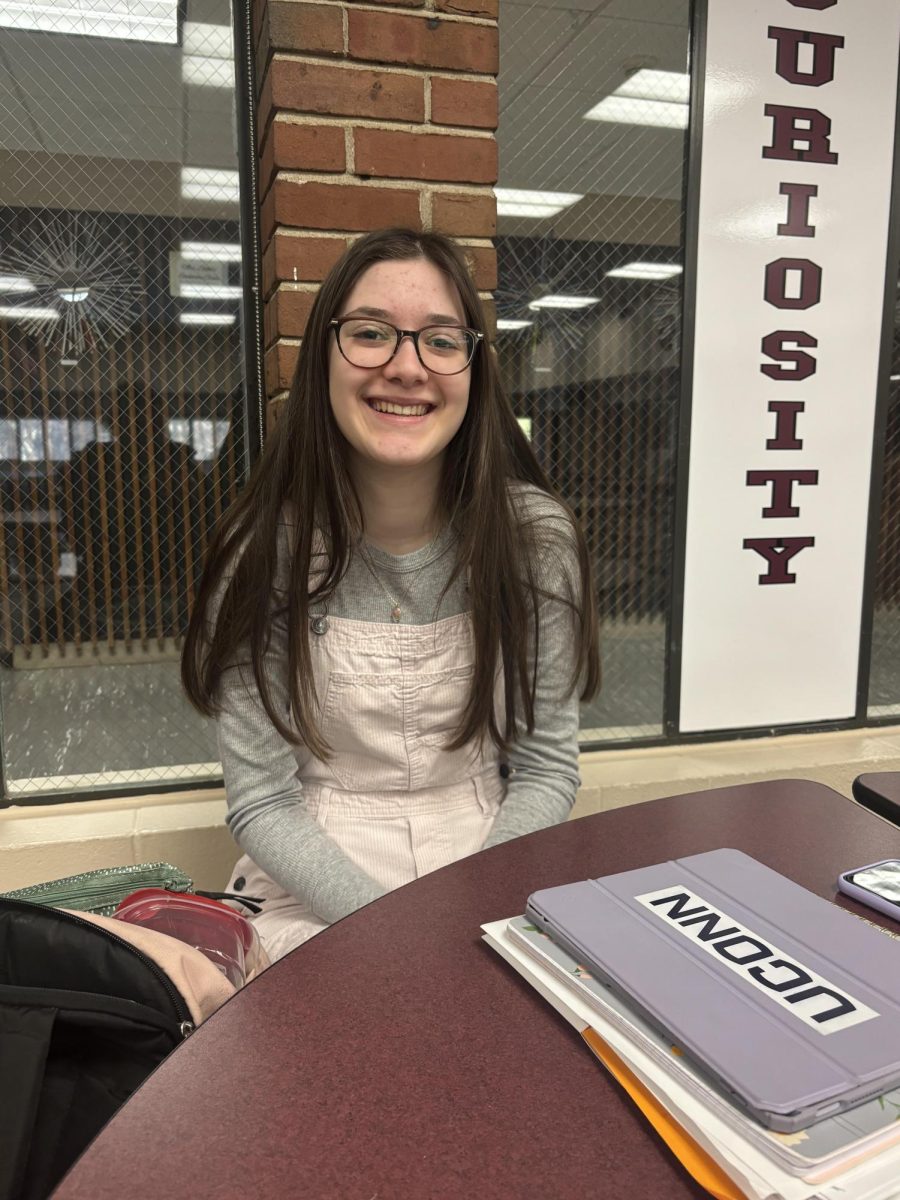
As a freshman, Eliza Magnan felt called to what Canton’s art department had to offer. What began as something fun turned into a hobby and passion, even outside of school, but it all started with a pencil.
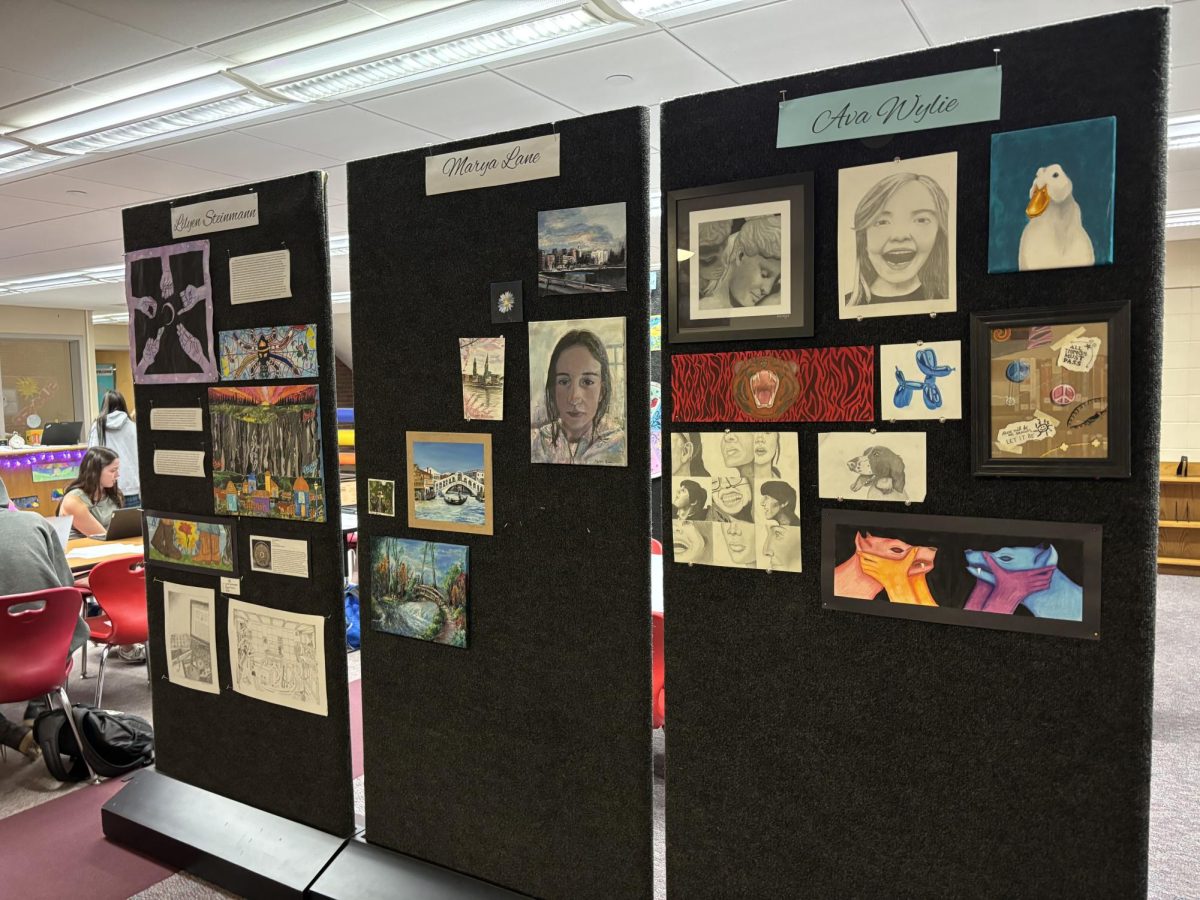
She started with Drawing and Painting courses, filling her schedule with as many art classes as she could. That’s where she learned the fundamentals, shading, color mixing, and how to turn what she saw into something on paper. She enjoyed it and quickly improved, but after a while, it started to feel like she could be doing something beyond paper.
“I liked painting,” she says, “but I wanted to try something that felt more creative.”
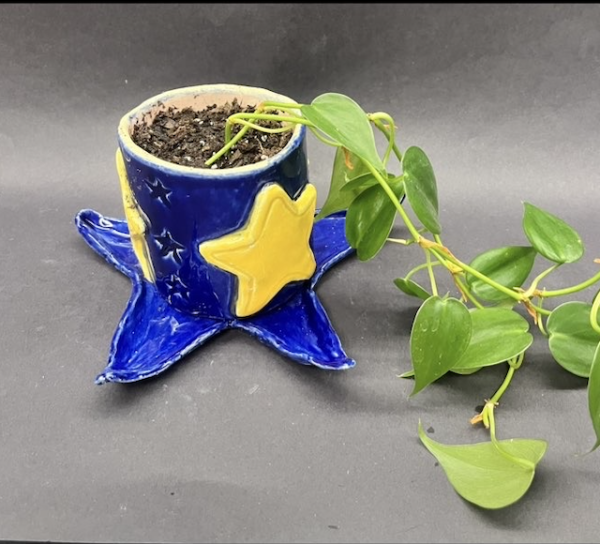
That “something different” turned out to be ceramics. Eliza signed up for Ms. Stife’s sculpture classes without really knowing what to expect. It was just a change of pace at first, but once she started working with mediums other than paper, it clicked in a way her other art classes haven’t. It unlocked true passion.
“It’s more hands-on,” she says. “You’re actually building something.”
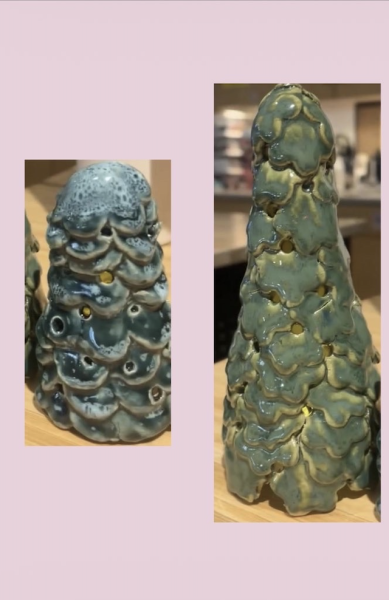
Now, after both Ceramics classes, alongside every other physical art class, pottery has become her focus. While she still holds onto her background in Drawing and Painting still shows, especially in her attention to color and design, it’s clay that she connects with the most.
One of the things that she likes about pottery is the freedom that comes with it. Most days, she doesn’t start with a detailed plan. Instead, she sits down and lets the process guide her.
“Sometimes it works, sometimes it doesn’t,” she says. “But that’s really the point I guess.”
The mindset didn’t come naturally at first. In her earlier art classes, there was more pressure to get things exactly right, to make a drawing look realistic or a painting look polished. Ceramic changed that. Small imperfections, like uneven edges or an unexpected shape, don’t ruin a piece, they give it character.
A lot of that shift comes from the environment in Ms. Stife’s classroom. The atmosphere is calm and low pressure, which makes it easier to focus and experiment within assignments. For Eliza it’s a break from her work load, from college stress, a time to be anxiety free.
“It’s one of the only classes where I don’t feel stressed,” she says. “You just work it out.”
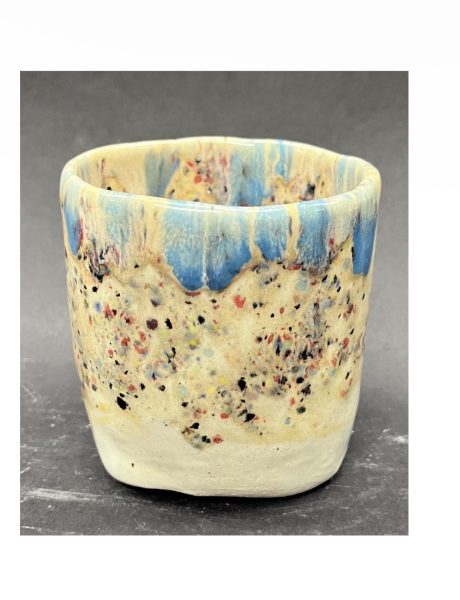
Even in that relaxed setting, she’s constantly improving. Over time, she has gotten better at centering clay, shaping forms, and experimenting with different glazes. Her earlier experience in drawing and painting still influences her work, especially in how she thinks about color and detail.Yet pottery is what changed how she defines art.
“It’s not just about how it looks,” she explains. “It’s about making something of my own.”
For Eliza, the process matters just as much as the finished piece, maybe even more. There’s something different about creating something you can actually hold, something that started as nothing but an odd lump of minerals and turned into something real.
She’s not exactly sure what role art will play in her future, as she doesn’t necessarily see it becoming a career. But she does know one thing: she doesn’t want to stop.
“I don’t think I’ll ever stop working with clay,” she says, “I go paint pottery with my friends, so I can definitely see myself doing it in college.”
What started as sketches on paper turned into something more tangible. And for Eliza, that’s what makes it meaningful.